Alphabet’s AI Spending Shock: Who Will Win the Race and Why It Matters Beyond the Market
Alphabet just spent tens of billions on AI in one quarter. The market got nervous. The real question is bigger: who becomes the default AI people actually use, and what that means for privacy, work and the internet.


Last week, one of the world’s largest companies released results that surprised the market. Alphabet (the company behind Google) spent tens of billions of dollars on artificial intelligence in a single quarter, and investors reacted nervously. Some are asking whether that spending is excessive and whether it will ever pay off. The question is not new, and after this report a clear answer has become even harder to give. That makes this a good moment to take a broader look at what is actually happening in the AI race and why it matters far beyond the capital markets.
Who will become synonymous with AI?
The current race in artificial intelligence is not only about who has the best model. It is also a race over who becomes the first place people go when they need AI. For most people outside the IT world, ChatGPT is still the synonym for artificial intelligence. That creates a real problem for every other company. People do not like switching between many different tools, and the average person often finds it hard to notice meaningful differences between products that are quite similar and that already meet their needs.
Changing habits does not happen overnight. Companies that already have something people use every day like a search engine, an operating system, or office tools, therefore have an advantage. They do not have to convince people to switch to an entirely new product. Instead, they can embed AI into something that already exists. That does not guarantee they will win, but it makes the path easier.
AI is not just a chatbot, and privacy is becoming more important
In public discussions, AI is most often described as a chatbot you talk to. Companies, however, are already using it for much broader tasks: data analysis, writing reports, process automation, document review, and similar work.
This raises a serious privacy problem. Most serious companies will not send their contracts, financial data, emails, or employees’ personal information to public AI tools. Uploading someone’s cv or health data into public ChatGPT creates legal risk in many countries. In respect to that demand is growing for private solutions that can run inside the company, without data leaving the organisation. Privacy and control over data will become an increasingly important factor in who wins the business market.
AI really does increase productivity, but not everyone wants that equally
People who already use AI tools in their daily work are completing many tasks faster: writing, research, data analysis, preparing presentations, and handling emails. The productivity gap between those who use AI and those who do not will only widen in the coming years.
The picture looks different from the perspective of state institutions. Tools that raise productivity can reduce the need for a certain number of employees. That is uncomfortable for many administrations, for reasons that include the risk of a smaller workforce and greater pressure on the social role of the state alongside lower tax revenues. The issue is especially visible in Europe, where changes in the public sector are slow and politically sensitive. This does not mean Europe will refuse AI. It means adoption is likely to be slower and to face more resistance.
A geopolitical question follows. If Europe does not develop its own sufficiently capable AI tools, it will depend on American or Chinese models. Using those tools inside state institutions could give a third party insight into what is being done.
What will happen to the internet as we know it?
A large part of the internet still works on a simple model: people publish content (blogs, articles, forums) and monetise it through advertising or subscriptions. Many of those sites were never highly profitable, but they existed because people wanted to share information and discuss it.
AI is already reducing traffic to some of these sites. People receive answers directly in a chat or in a search engine and no longer need to visit the original source. If the trend continues, some smaller sites and blogs could disappear.
One possible solution resembles the model that has worked on YouTube for years. Creators receive a share of advertising and subscription revenue when people watch their videos. In the future, AI tools might have to pay a small fee each time they use someone’s content. If they refuse, access to that content could be restricted. Whether such a model spreads to the rest of the internet is still unclear, but the need for some form of payment to creators is becoming more obvious.
Conclusion
Artificial intelligence is here and will not disappear. Demand for tools that raise productivity and make information easier to access will continue to grow. At the same time, the technology raises questions of privacy, dependence on foreign models, and the future of the internet as we know it.
Large companies are currently spending enormous sums to stay relevant in the race. The market has reacted nervously, which is not surprising given the scale of the money involved. The real contest, however, is only beginning. Its results will not be visible only in the capital markets. They will also shape how we work, how we protect our data, and what the internet looks like in a few years.
As for Google; the company with which this story began, the market’s reaction to the latest report looks exaggerated. Search continues to grow, Cloud has expanded strongly, and the company possesses something most competitors lack: the ability to embed AI into a search engine that billions of people already use every day.
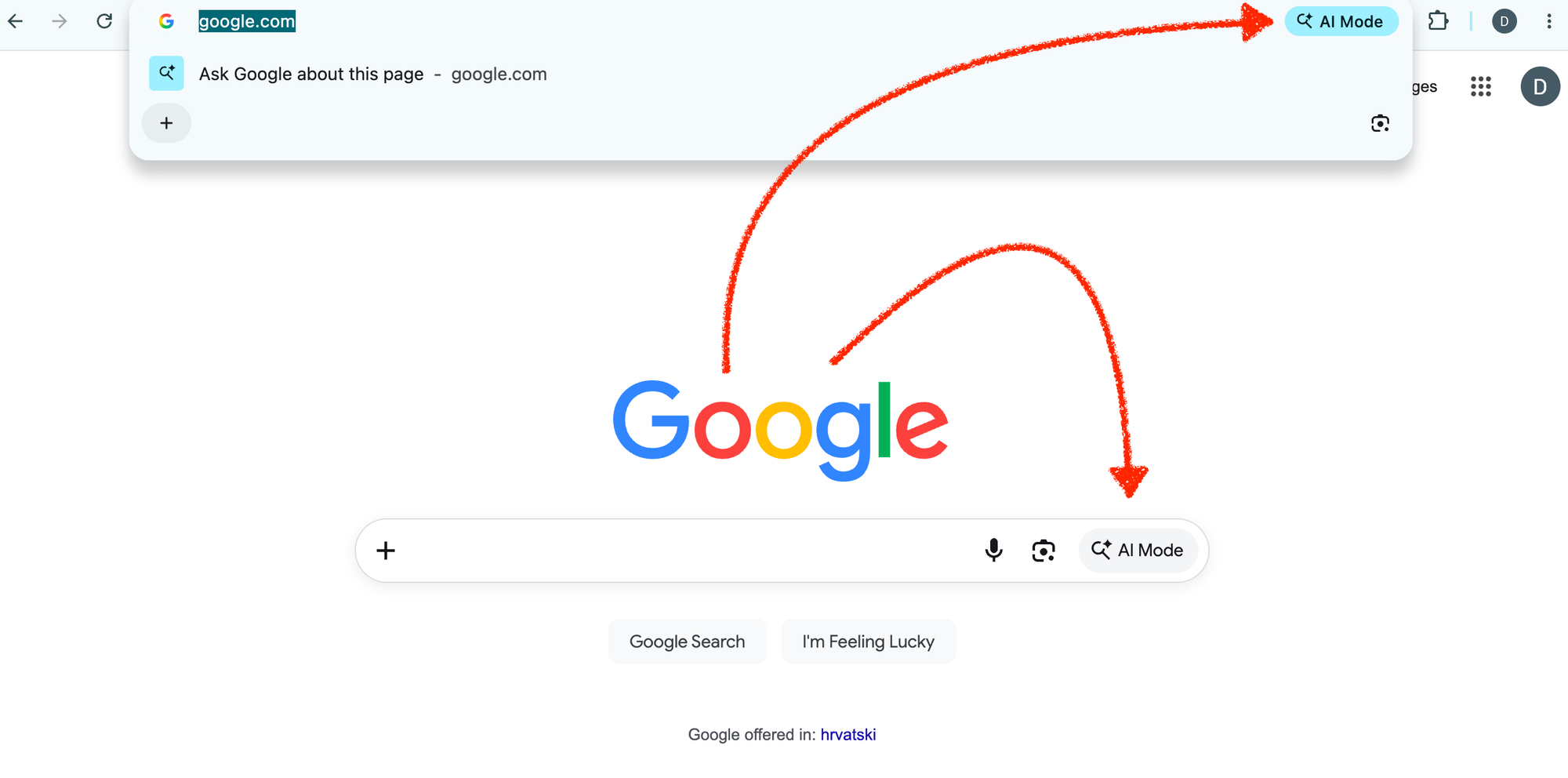
Whether that will be enough to make Alphabet the synonym for AI remains to be seen in the coming quarters. At this moment, however, it looks like one of the better-prepared players for what comes next.